
Other Projects
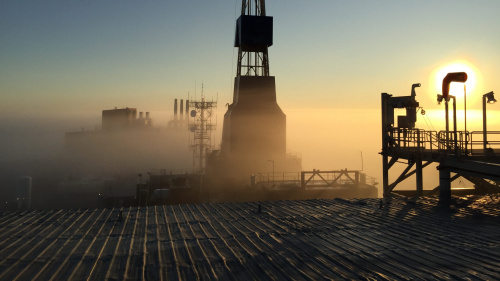
Four-dimensional seismic and oil geomechanics studies of Foruzan oil field (Dr. Reza Falahat)
Carfarka: Iranian Offshore Oil Company (2019 to present)
In this project, the oil fields of the Persian Gulf were investigated and prioritized in terms of seismic feasibility. Then, Foruzan oil field was selected for further studies. In the next stage, industrial and scientific rock physics models were studied and a new rock physics model suitable for this field was developed. Then, four-dimensional seismic feasibility studies were conducted in one-dimensional and three-dimensional scales. Finally, oil geomechanics studies were conducted to investigate the effect of pressure changes due to field production on reservoir parameters.
Interpretation of seismic data of the South Pars gas field (Dr. Reza Falahat)
Contractor: Pars Oil and Gas Company and Asmari International Exploration Company (2019 to present)
In this project, a comprehensive interpretation of seismic data of the South Pars gas field (gas and oil layers) was carried out. Rock physics studies, AVO Modeling, seismic inversion based on the model and geostatistics and characterization of the reservoir were carried out, and high-quality reservoir areas were proposed for drilling new wells and developing the field.
Oil and gas exploration studies in the northwest of the country (Dr. Reza Falahat)
Contractor: Exploration Management of the National Iranian Oil Company (2019 to 2021)
This project covered initial oil and gas exploration studies in the 6 provinces of the northwest of the country. In this project, layers of information were collected, such as geological maps, satellite images, aerial geophysical data, and all academic and industrial studies. This information was verified and a comprehensive database of the northwest of the country was created in the geographic information system. In the next stage, field surveys were conducted in the northwest provinces of the country and data and rock samples were collected. Subsequently, the faults of the region were comprehensively mapped and geological and tectonic models of the region were presented. Sedimentary models and basin analysis were also presented. Subsequently, based on the potential of the region for the formation of suitable reservoirs for the accumulation of oil and gas, 5 priorities were selected and proposed, with the Sarab-Bostanabad and Mianeh-Zanjan regions being selected as the main priorities, which contain suitable reservoir rocks with appropriate thickness and depth.
Investigation and construction of a static model of Ahvaz oil field, Bangestan reservoir (Dr. Reza Falahat)
Contractor: National Company for Oil-rich Areas of Southern Iran (2019-2020)
In this project, an investigation was made of the geological model of Ahvaz oil field, Bangestan reservoir. This oil field is the largest oil field in our country and the third largest in the world, and is currently producing with more than 600 wells. Next, a new static model of this reservoir was built in the Petrol software. For this purpose, the latest scientific and industrial findings were used to cover the complexities of this field with appropriate accuracy.
Optimal selection of drilling fluid density based on penetration rate and well wall stability (Dr. Seyed Shahab Tabatabaei Moradi)
Contractor: National Company of Southern Iranian Oil Fields (2019 to present)
In this project, using drilling operation data from a number of wells in one of the country's oil and gas fields, the criteria for well wall stability and penetration rate in selecting drilling fluid density are examined. Drilling fluid density is one of the most important fluid characteristics that plays an important role in successful drilling operations for oil and gas wells. Selecting low fluid density values, although increasing the penetration rate, can lead to problems with well wall instability. Therefore, in this project, both criteria for penetration rate and well wall stability are examined in selecting fluid density.
Development of drilling mud compositions to facilitate the process of rock destruction in dense (hard) formations (Dr. Seyed Shahab Tabatabaei Moradi)
One of the methods for optimizing the drilling process of oil and gas wells in order to reduce the overall costs of well construction is to increase the rate of drill penetration into the formation, or in other words, to increase the drilling speed. One of the important factors affecting the rate of drill penetration is the characteristics of the drilling fluid used during drilling operations. In this project, drilling fluids with selected additives have been developed. The additives include surface active agents (anionic, cationic and non-ionic), bentonite and polymers. The tests include measuring the weight (density) of the drilling fluid, the dynamic contact angle of drilling fluid droplets on the rock sample, the absorption factor of the drilling fluid inside the rock sample, the uniaxial compressive strength and the rate of penetration of the core drilling device into the rock sample. The rock selected for the tests is from the surface samples of the Sachon dolomitic limestone formation. The results of the experiments show that using a surfactant with an appropriate concentration and a polymer as a lubricant can increase the penetration rate of the drill bit inside the rock sample.