
Reservoir Field
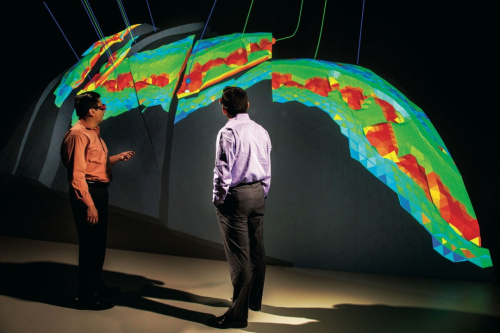
Introduction to Petroleum Engineering - Reservoirs
This undergraduate course is one of the trends in the petroleum engineering field and one of the higher technical-engineering courses, which aims to train specialists who have the necessary abilities and skills to implement plans, select optimal production methods, conduct reservoir studies and simulate oil and gas reservoirs using relevant software. Reservoir engineering knowledge deals with how much oil and gas there is in an underground oil field, how much of it is accessible and with what quality it can be safely extracted from the desired reservoir. Petroleum engineering studies the tendency of reservoirs, the type of reservoir in terms of oil or gas, and also extraction from the reservoir.
This course is based on courses in oil and gas reservoir engineering, drilling and production engineering, properties of reservoir rocks and fluids, petroleum geology, reservoir conservation management, reservoir simulation, fractured reservoirs, methods of enhanced recovery, thermodynamics, fluid mechanics, mass transfer, and ... .
The role and capabilities of graduates of this field:
Investigating the production capability in the reservoir by using and benefiting from new study and modeling methods
Evaluating the pressure distribution in the reservoir and justifying the pressure drop in the reservoir and justifying the pressure drop and how to control it
Providing optimal operating conditions for the exploitation of the reservoir by using the characteristics and behavior of the reservoir
Choosing a method of increased extraction appropriate to the characteristics of the reservoir according to economic considerations
Evaluating the impact of increased extraction from reservoirs on the environment
Graduates of this course can play a role in studying and modeling reservoirs and using optimal methods of increased extraction, and in general, developing a plan and strategy for the conservation of the country's reservoirs.